Hair types explained: the 1A–4C curl patterns (and their limits)
Where the 1–4, A–C hair typing system comes from, what each number and letter means, why scientists use a different eight-type scale — and why your hair type is a starting point, not a rulebook.
Reviewed on
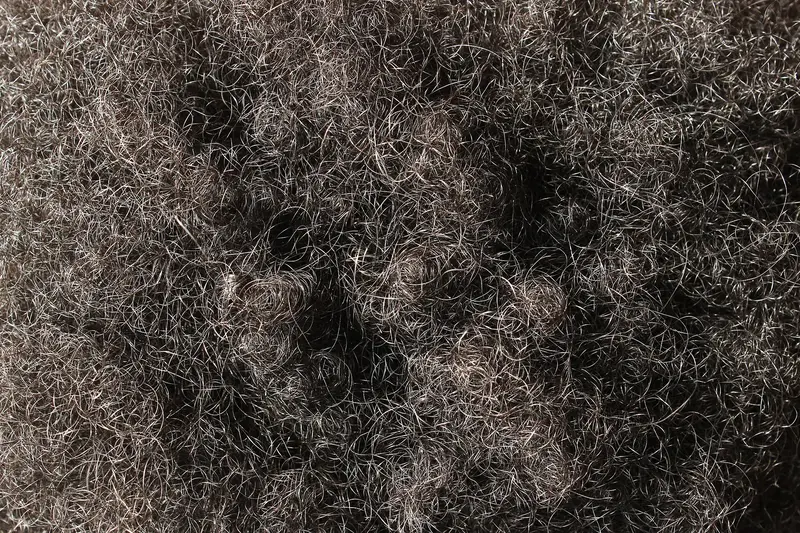
The system everyone uses
If you've ever read "3B curls" or "4C coils", you've met the most widely known hair typing system. It was created in the 1990s by the hairstylist Andre Walker — originally, as a 2026 dermatology review puts it, to market his own hair-care products — and spread through celebrity endorsement and the natural-hair community.
It works like this:
- Numbers describe texture: 1 = straight, 2 = wavy, 3 = curly, 4 = coily.
- Letters describe how tight the pattern is within each number: A is loosest, C is tightest.
So 2A is a loose, barely-there wave and 4C is a very tight, zigzag coil. Our hair types pages show our own drawings of each pattern.
Why it's only a rough guide
The same 2026 review sets out the main criticisms:
- It doesn't cover the full range of curly hair.
- Most people have more than one pattern on the same head — the review notes curl pattern and density can vary with scalp location.
- It ignores other things that matter for care, such as density and porosity (see porosity and density).
- Systems like this were developed by hair-care companies to promote products, not validated by independent researchers, and aren't meant for clinical use.
The American Academy of Dermatology mentions number-and-letter typing as something you'll see, without endorsing it as a scientific method.
What scientists use instead
Researchers at L'Oréal measured hair from more than 1,400 people in 18 countries (and, in a follow-up, more than 2,400 people in 22 countries) and sorted it into eight curl types (I–VIII) using three or four measurements of the hairs themselves — curve diameter, a curl index, and the number of waves (and twists). Types I–IV range from straight to wavy; types V–VIII are curly and coily. Crucially, the method classifies hair without referring to ethnicity: straight type I hair is type I wherever it comes from. Under the microscope, curlier hairs also tend to have a more oval (elliptical) cross-section.
How to use your "type"
- Look at most of your hair, not one ringlet — and expect a mix.
- Watch how it behaves: how quickly it gets oily, how it tangles, how it responds to products and humidity.
- Treat product labels as suggestions. A "4C" cream won't fail just because some of your hair is 3C.
- Your hair can look different as it grows, and after heat or chemical treatments, so re-assess now and then.
Ready to put it to use? Try the routine builder.
Not medical advice. This guide is general information from the sources listed, not a diagnosis or a substitute for a pharmacist, GP or dermatologist. If you are worried, or symptoms are severe or not improving, get advice. Read our health information policy.
Sources
- Callender V et al. Classification of high curl pattern hair: a systematic review and clinical perspective. J Cosmet Dermatol 2026 pmc.ncbi.nlm.nih.gov
- De la Mettrie R et al. Shape variability and classification of human hair: a worldwide approach. Hum Biol 2007 pubmed.ncbi.nlm.nih.gov
- Loussouarn G et al. Worldwide diversity of hair curliness: a new method of assessment. Int J Dermatol 2007 pubmed.ncbi.nlm.nih.gov
- Richena M et al. Morphological analysis of large numbers of hair cross sections. Int J Cosmet Sci 2025 pmc.ncbi.nlm.nih.gov
- American Academy of Dermatology – Tips for healthy hair aad.org