Safe heat styling: dryers, straighteners and curling tongs
Heat changes hair, and more heat does more damage. What the research says about dryer distance, straightening wet hair and heat protectants — and the simple habits that limit damage.
Reviewed on
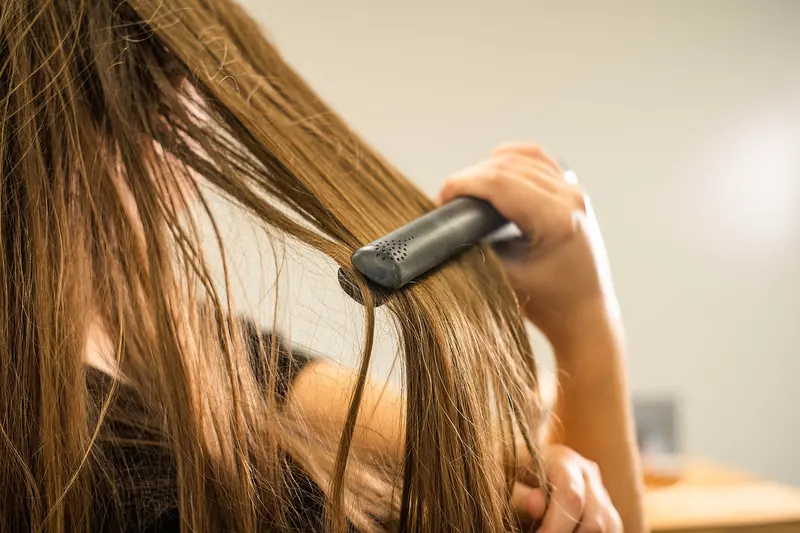
What heat does
Hair is made of protein. Laboratory studies show heat damages the hair surface more as the temperature rises; straighteners can run at over 200°C, and thermally stressed hair breaks more easily when combed. Researchers measuring the chemistry of heated hair concluded that controlling temperature is what matters most.
Blow-drying: distance and movement
A widely cited 2011 laboratory study washed and dried hair samples 30 times in different ways. Surface damage increased as the temperature went up — but hair dried with a dryer held about 15cm away and kept moving ended up with less overall damage than hair left to dry naturally, which had damage deeper inside the fibre. Very close, very hot drying (5cm, about 95°C) did the most surface damage — and both that and natural drying lightened the hair's colour during the study.
The American Academy of Dermatology (AAD) suggests letting hair air-dry when possible; the study suggests a dryer used carefully is fine. The common ground:
- Use a low or medium heat setting.
- Keep the dryer moving and roughly a hand-span (15cm) away.
- Towel-blot first so you spend less time drying.
Straighteners and tongs
- Use them on dry hair unless the tool is designed for damp hair. A University of Manchester study found straightening wet hair caused considerably more structural damage than straightening dry hair, probably because the water boils off so fast.
- Use the lowest temperature that gives the style you want (AAD). There's no official "safe" maximum temperature.
- Fewer passes, less often — the AAD suggests aiming for once a week or less.
- Choose a tool with a temperature dial or setting so it isn't hotter than it needs to be.
Heat protectants
Apply a heat protectant spray or cream before styling (AAD). Lab studies found some protectant ingredients (certain polymers, and silicones that spread heat along the hair) reduced heat damage and breakage. They reduce damage — they don't make high heat harmless, and a manufacturer's "protects up to 230°C" claim isn't a target. See our heat protectants.
Safety
Hot tools burn. Keep them away from water, the scalp and children; let them cool before putting them away; and unplug them after use. See each tool's instructions.
Not medical advice. This guide is general information from the sources listed, not a diagnosis or a substitute for a pharmacist, GP or dermatologist. If you are worried, or symptoms are severe or not improving, get advice. Read our health information policy.
Sources
- Lee Y et al. Hair shaft damage from heat and drying time of hair dryer. Ann Dermatol 2011 pubmed.ncbi.nlm.nih.gov
- Christian P et al. The effects of water on heat-styling damage. J Cosmet Sci 2011 pubmed.ncbi.nlm.nih.gov
- Zhou Y et al. Cosmetic pretreatments protecting hair from thermal damage by flat ironing. J Cosmet Sci 2011 pubmed.ncbi.nlm.nih.gov
- Lima CRRC et al. Heat-damaged evaluation of virgin hair. J Cosmet Dermatol 2019 pubmed.ncbi.nlm.nih.gov
- Gavazzoni Dias MF. Hair cosmetics: an overview. Int J Trichology 2015 pmc.ncbi.nlm.nih.gov
- American Academy of Dermatology – Tips for healthy hair aad.org
- American Academy of Dermatology – 10 hair care habits that can damage your hair aad.org
- American Academy of Dermatology – Black hair: tips for everyday care aad.org