Conditioning and detangling without breakage
Shampoo cleans the scalp; conditioner protects the lengths. How conditioner works, where to put it, rinse-out versus deep conditioning, and how to detangle wet hair without snapping it.
Reviewed on
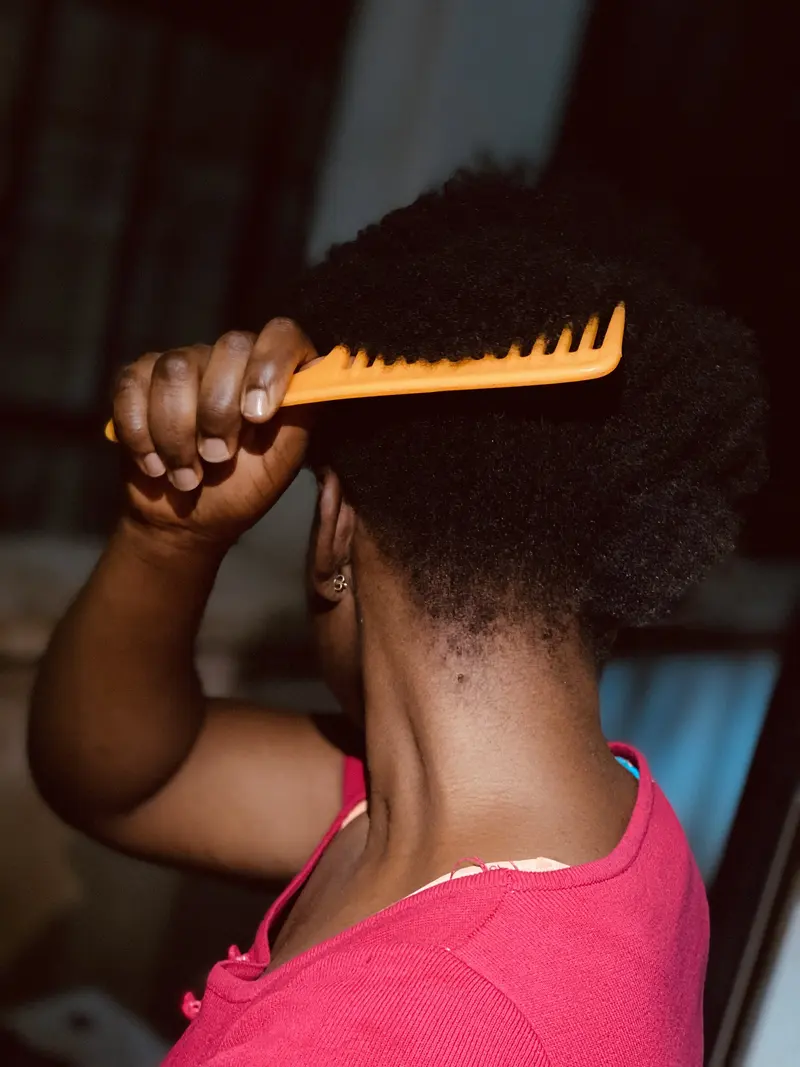
Why conditioner matters
A shampoo that removes all the oil from your hair would leave it, in one review's words, frizzy, dry and unmanageable. Conditioner puts some of that back. Most conditioners contain positively charged ingredients that cling to the negatively charged hair surface, which reduces static, smooths the cuticle and cuts friction between hairs — so hair tangles less, combs more easily and frizzes less. Silicones in many conditioners add to this smoothing effect (see silicones).
The American Academy of Dermatology (AAD) suggests using conditioner after every shampoo.
Where to put it
- Fine or straight hair: concentrate on the ends (AAD), which keeps roots from going flat or greasy.
- Dry or curly hair: apply through the full length (AAD).
- Keep it off the scalp if you're prone to greasiness or flakes, and rinse it out completely.
Rinse-out, deep and leave-in
- Rinse-out (instant) conditioner: used straight after shampooing and left for a few minutes.
- Deep conditioners and masks: left on for longer (one review says 20 to 30 minutes) and used for very dry hair.
- Leave-in conditioners: stay in to help with detangling and styling — especially useful for curly and coily hair. On straight hair they can look oily or dull.
Detangling without breakage
Wet hair is more fragile: a hair-science review notes healthy hair can stretch by about 30% when wet without damage, but stretching it further causes permanent changes. So:
- Use a wide-tooth comb on wet hair, not a brush (AAD).
- Start at the ends and work up towards the roots.
- Thick or curly hair: comb while the conditioner is still in, in the shower (AAD).
- Straight hair: let it dry a little before combing (AAD).
- Never yank. Hold the hair above a knot, and add more conditioner if needed.
- Blot dry with a towel or T-shirt instead of rubbing.
Brush and comb only to style — hair doesn't need 100 strokes a day.
Not medical advice. This guide is general information from the sources listed, not a diagnosis or a substitute for a pharmacist, GP or dermatologist. If you are worried, or symptoms are severe or not improving, get advice. Read our health information policy.
Sources
- D'Souza P, Rathi SK. Shampoo and conditioners: what a dermatologist should know? Indian J Dermatol 2015 pmc.ncbi.nlm.nih.gov
- Gavazzoni Dias MF. Hair cosmetics: an overview. Int J Trichology 2015 pmc.ncbi.nlm.nih.gov
- American Academy of Dermatology – Tips for healthy hair aad.org
- American Academy of Dermatology – 10 hair care habits that can damage your hair aad.org
- American Academy of Dermatology – Teaching your child healthy hair care habits aad.org